|
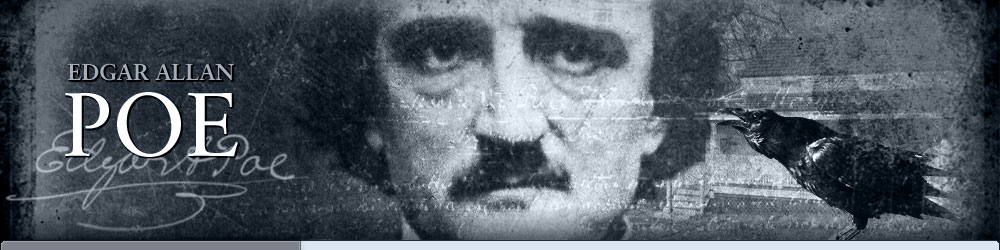
Why Virginia? Edgar Allan Poe (January 19, 1809 – October 7, 1849) shaped world literature by exploring the darkest recesses of the human mind in his fiction and poetry. The forces that shaped his own life can be traced to the many years he spent in Virginia. Having first arrived in the state when he was only a year old, Poe began a lifelong association with the Old Dominion. Over the course of his forty-year life, he spent thirteen years in the Virginia capital of Richmond—longer than he lived in any other city. In Richmond, Poe grew up, fell in love, married, wrote his first poems, and began his literary career. Elsewhere in Virginia, Poe attended college and served in the military. Even when he moved to New York and Philadelphia, Poe boasted of his Virginia roots and challenged the northern literary establishment while championing the cause of southern literature. This is why he famously wrote in an 1841 letter, “I am a Virginian--at least I call myself one, for I have resided all my life, until within the last few years, in Richmond.” Poe Sites In Virginia ![]() Fort Monroe Poe returned to Fort Monroe twenty years later to give one of his last public readings in Norfolk and stayed at the Hygeia Hotel. One night during his stay, Poe gave a private reading for a few female admirers on the Hygeia’s veranda. ![]() Hanover Tavern Tours of the building are available Tuesdays through Saturdays. For more information call (804) 537-5050. ![]() Poe’s Dorm Room The University was a dangerous place in Poe’s time. One professor described the students as “the worst that I ever knew.” Drinking, gambling, and fighting were common, and riots broke out from time to time. One of Poe’s letters home describes a fight outside his dorm room that ended with one student repeatedly biting the other on the arm. Another student horsewhipped a classmate for cheating at cards. Poe was never disciplined for any misconduct at the University, but he did engage in gambling and ran up a debt of about $2,000. Located near the Rotunda, Poe’s dorm room has been preserved and is viewable through a glass door. A recording details the story of Poe’s life, and a historical marker provides additional information. ![]() Hiram Haines House For years, the Coffee House was occupied by a used office furniture store, but a new owner more appreciative of the building’s history has recently purchased it and will convert it into a “literary tavern.” ![]() Saint John’s Church The yard around the church contains some graves of interest to Poe. The most important is that of Poe’s mother, the traveling actress Elizabeth Arnold Poe. It is located along the east wall of the churchyard. By the time Mrs. Poe died in 1811, her husband had abandoned her, and she was dependant upon the society ladies who brought meals to their favorite actress. Ordinarily, such ladies did not associate with actresses since acting was still considered a dishonorable profession, but Mrs. Poe was especially popular. It was an honor that such a woman as Mrs. Poe was allowed to be buried in a church yard, and there is said to have been some protest mounted by some members of the church at the time. Her placement in an unmarked grave as close as possible to outside wall of the yard could be evidence of this. The marker you will find there today was placed in 1927 by the Raven Society and the Poe Foundation on the spot Poe Museum founder James H. Whitty had located by searching through the church’s burial records. Another grave of interest is that of Thomas Willis White, Poe’s boss at the Southern Literary Messenger. The stone is located to the right of the brick path and in front of the Parish Hall. A plot containing the graves of MacKenzie family members is located near the entrance to the right of the path. The MacKenzies took care of Poe’s sister Rosalie after her mother died. ![]() Elmira Shelton House The building was originally a rental property owned by the Van Lew family, whose mansion stood one block to the west. The Van Lews’ daughter Elizabeth was a Union spy during the Civil War. The Shelton House was once the headquarters of the Historic Richmond Foundation but has since been transferred to private ownership. In 2004 the 500-pound iron gate was stolen from the front yard. Within days the story of the missing gate had been reported in the local media, and the gate was returned in the middle of the night. ![]() Monumental Church Designed by Robert Mills (who also designed the Washington Monument in Washington D.C.) this church was designed to resemble an ancient tomb and is covered with symbols of mourning and death. Monumental Church not only resembles a tomb but also serves as the final resting place for the remains of the fire victims. They are located in a crypt beneath the front portico. The church no longer has an active congregation and is owned and maintained by the Historic Richmond Foundation. It is open for tours on weekends during the summer. ![]() Masonic Lodge ![]() Old Stone House The Association for the Preservation of Virginia Antiquities saved the building from destruction in 1913 and loaned it to the Poe Foundation for use as a Poe Museum, which opened in 1922. Beginning in 1927, the surrounding buildings were removed or cut back to reveal three sides of the house to the street. A 1970 restoration removed later additions like mantels and wood paneling and replaced the deteriorating floorboards in the west room, but the floorboards in the east room are believed to still be original or at least very old. Examination of the tree rings on the removed floorboards has dated them to 1754. The roof was restored in 2008. A peculiar feature of the house is the insignia “IR” to the right of the east window on the south side of the house. One theory holds that the initials stand for “Jacobus Rex” meaning “King James” and that the house was built during the brief reign of James II from 1685 to 1688. Other theories tell that the stone was either found among the ballast stones thrown ashore from ships coming to load up with tobacco at the Port of Manchester or that the stone was left by Christopher Newport when he first reached the Falls of the James in 1607 during the reign of James I. ![]() Talavera ![]() The Craig House He described his first meeting with her to his friend Sarah Helen Whitman who reported that Mrs. Stanard “afterwards became the confidant of all his boyish sorrows, and hers was the one redeeming influence that saved and guided him in the earlier days of his turbulent and passionate youth.” Shortly after she met Poe, Mrs. Stanard went insane and died. Poe wrote his lyric poem “To Helen” in her memory. ![]() Poe Statue
March 2010
April 2010
May 2010
June 2010
July 2010
August 2010
September 2010
October 2010
November 2010
December 2010
January 2011
February 2011
March 2011
April 2011
May 2011
June 2011
July 2011
August 2011
September 2011
October 2011
November 2011
December 2011
January 2012
Next Event
|
|